
Skip to product information






1 / 10


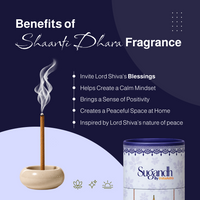
The benefits
Peace. Calm. Harmony.
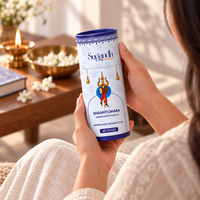
Rooted in traditional pooja practices, Shaanti Dhara blends sandalwood, tulsi and khus—ingredients valued for their soothing, grounding fragrances and association with peace and purity.

FAMILY PEACE
Ease greh kalesh
Burn during prayer to create a more peaceful atmosphere and support prayers for easing family tension. Sandalwood and khus bring a soft, grounding fragrance.

RELATIONSHIPS
Bring calm to strained relationships
For moments marked by arguments or misunderstandings, the soothing blend of sandalwood, tulsi and khus accompanies prayers for peace and reconciliation.

PEACEFUL HOME
Create a calmer atmosphere
The earthy, cooling scent of khus and warm sandalwood helps make your space feel more settled and restful.

UNDERSTANDING
Encourage patience and togetherness
Tulsi’s sacred place in Hindu worship and sandalwood’s long use in pooja make this blend a meaningful companion to prayers for understanding and family harmony.
• THE FRAGRANCE •
Warm. Earthy. Traditional.
Guggul brings a deep, earthy fragrance, while Loban adds a warm, rich aroma. Together, they create a scent for prayer and everyday spiritual rituals.

INSPIRED BY LORD HANUMAN
Strength. Courage.
Strength. Courage.
Protection.
Lord Hanuman is honoured as a symbol of strength, courage and protection. Raksha Dhara draws inspiration from these qualities and is made for daily prayers seeking strength and protection.
Mantra, if you wish:
ॐ हनुमते नमः
Om Hanumate Namah
Every ingredienthas a reason.
Every ingredient has a reason.
Real resins, woods and flowers, not derivatives or essential oils. Each is named by the myth or ritual it belongs to.
Real resins, woods and flowers, not derivatives or essential oils. Each is named by the myth or ritual it belongs to.

Guggul
A traditional aromatic resin used in dhoop and prayer rituals.

Loban
A warm, earthy resin often used in devotional rituals.

Camphor
A familiar part of aarti and many Hindu prayer rituals.

Neem
Traditionally associated with cleansing and protection in Indian homes.
The ritual
Light it in five steps.
Best lit on tuesday morning, during your prayer or puja. Scroll, and let the flame follow you down.
-
1
Choose the day
Tuesday belongs to Hanuman. Tuesday is traditionally associated with Hanuman. Light it whenever you pray for protection from negative energies and Nazar.
-
2
Cleanse the space
Wash your hands, tidy the corner where you will sit, and open a window.
-
3
Light one stick
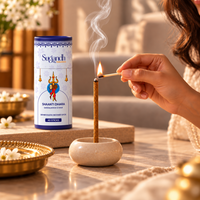
Light it near your puja space or at the entrance of your home, and place it in the ceramic stand.
-
4
Offer the mantra
Chant Om Hanumate Namah softly, eleven times, or as many as feels right.
-
5
Sit in stillness
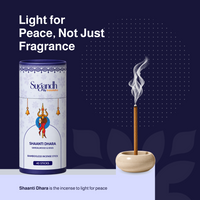
Let the stick burn safely in its holder. Continue your prayer for protection until the smoke has cleared.
The Sugandh difference.
| Raksha Dhara | Typical incense | |
|---|---|---|
| Scent from raw materials | ✓ | — |
| No essential oils or derivatives | ✓ | — |
| 100% charcoal free | ✓ | — |
| Bambooless | ✓ | — |
| No synthetic fragrance | ✓ | — |
| Free ceramic stand | ✓ | — |
Pure and organic
The fragrance is the plant, resin and flower themselves.
Non-irritating
Low smoke and no synthetic fragrance, made for daily devotion.
Free ceramic stand
A stand for every stick, so the ritual begins safely.
Good to know.
When is the best time to light it?
Tuesday morning, during your prayer or puja. You may also light it on another day during prayer for protection from negative energies and Nazar.
What does bambooless mean?
Most sticks are rolled around a thin bamboo core. Sugandh sticks have none. The stick is made wholly of the blend, so what burns is the fragrance and nothing else.
What makes it different?
The scent comes from real raw materials and not from derivatives or essential oils. It is 100% charcoal free and bambooless.
Is the outcome guaranteed?
No. Sugandh is offered in belief and tradition, in a spirit of devotion, and not as a promise of any outcome.
THE SACRED LINEAGE
The Dhara family.
Three sacred fragrances consecrated with Vedic stotras to anchor your daily rituals.


